The Carbon Market Vocabulary That We Cannot Afford
Let me start with a summary of some headlines and marquee events from the past couple of years that you have likely encountered if you follow the carbon market.
- In July 2025, India’s Ministry of Environment, Forest and Climate Change published a list of activities eligible under Article 6.2 of the Paris Agreement.
- In August, India signed its first bilateral cooperation agreement under this framework with Japan.
- Indonesia lifted its four-year pause on international carbon trading through a Presidential Regulation.
- Kenya mandated that 40 percent of net earnings from land-based carbon projects (on public or community land) flow to community beneficiaries.
- At COP30, Brazil launched an Open Coalition on Carbon Markets backed by 18 countries.
- KOKO Networks, once positioned as a poster child for clean cooking financed by carbon credits, went into financial distress amid a broader weakening of the voluntary market and questions about cookstove methodology.
- Microsoft’s shift toward durable removals has added to the uncertainty around nature-based voluntary credits.
If you read these stories, you will have noticed how casually the terms carbon market and carbon credit move across them, as if they referred to a single, coherent thing. They do not. India’s Article 6.2 list, Kenya’s benefit-sharing rule, KOKO’s cookstove credits and Microsoft’s procurement strategy sit under different mechanisms, with different rules, different accountability and different consequences for the climate. The commentary was often thoughtful. But little of it did justice to the distinctions that any serious discussion of pricing, trade or environmental outcomes actually requires.
Let me expand on those headlines to give some more detail. India’s list concerns Article 6.2, the sovereign accounting route under the Paris Agreement. Indonesia’s regulation authorises both Article 6 and voluntary activity. Kenya’s mandate applies across all land-based projects credits irrespective of the market mechanism. Brazil’s coalition is a political coordination platform. KOKO’s crisis was about voluntary cookstove credits under Verra methodologies. Microsoft’s shift is a corporate procurement decision in the voluntary market. These are different things, but the vocabulary makes them all look like the same thing.
The carbon market, or carbon credit, nomenclature works as if one name had been given to five individuals from the same family, connected by shared lineage. They share an origin, but they are not the same person. And our habit of using one name for all of them is not a harmless simplification. It makes the market harder to navigate, harder to regulate, and harder to use for the two things it exists to do: price a carbon externality and move finance toward climate action.
One word, five instruments
Let me expand on what the missing vocabulary, or the over-simplification, does in practice. Take the phrase carbon market itself. The compliance market, which includes the EU ETS (European Union Emissions Trading System), California’s programme and India’s forthcoming compliance mechanism under the Carbon Credit Trading Scheme, among others, now covers roughly 29 percent of global greenhouse gas emissions, with about 87 pricing instruments in operation and more than 107 billion dollars in government revenue in 2025, according to the World Bank’s State and Trends of Carbon Pricing 2026.
The voluntary market is a different order of thing entirely. It recorded transaction values of around 535 million dollars in 2024, with volumes down about a quarter on the year, as buyers moved toward what they regarded as higher-quality credits. That figure comes from Ecosystem Marketplace’s State of the Voluntary Carbon Market 2025.
The prices tell the same story. EU allowances traded in 2025 in a band of roughly 60 to 75 dollars per tonne. Voluntary credits averaged closer to 6 to 7 dollars, and even that average conceals a wide spread of activities, with removal credits carrying a premium of nearly 400 percent over reduction credits. These are not different prices for the same product. They are different products with the same label.
The instruments underneath are genuinely distinct. A compliance-based emission allowance is a legal right to emit under a cap, granted by a government. A voluntary credit is a documentary claim that a reduction happened somewhere else, governed by an independent standard. An Article 6.2 transfer is a movement between two national ledgers, with a corresponding adjustment to prevent double counting. An Article 6.4 credit sits under UNFCCC supervision. A contribution claim, in the VCMI (Voluntary Carbon Markets Integrity Initiative) sense, deliberately avoids saying that one tonne here cancels one tonne there.
Each carries its own obligations, its own verification, its own line of accountability. So, when a Kenyan official, an Indian regulator and an Indonesian developer all say carbon market, there is no guarantee they mean the same thing. When a Swiss buyer, a Singaporean intermediary and a Brazilian developer all say high-integrity carbon credit, they may not be pointing at the same object at all.
Is vocabulary really the problem?
It is worth being fair to our need for simplification. Every emerging field leans on rough language early on, and carbon was no exception. A shared, imprecise vocabulary is often what lets very different actors cooperate before they could agree on precise definitions. It is arguably what got environment ministries, finance ministries, corporates and NGOs into the same room at all.
Simplification did something more fundamental too. It produced a single tradable unit. Donald MacKenzie, in his study of how carbon markets were built, shows that turning a tonne of one gas and a tonne of another into one interchangeable unit is a political and technical achievement, not a fact of nature, and that supporters and critics alike underestimate how much institutional work it took. His point is cautionary rather than celebratory: the same act of making things the same flattens real differences in how, where and when emissions are avoided or removed. But without that simplification, a global market would not have been conceivable at all.
But here is the issue that simplification creates. The compacting of many distinct things into one, the very move that made this market possible, is now hindering its growth. A market has to compare things, and comparison needs the unit to hold still. So long as the unit is only a label in a negotiation, its vagueness is harmless, even useful at times. But the moment a price is attached to it, that same vagueness stops being a convenience and becomes an obstacle, because buyers can no longer tell what quality they are paying for or how to price it at all.
This is not an abstract argument. It has been studied in a neighbouring sector, one that sits inside the same broad sustainability domain: sustainable finance. When Berg, Kolbel and Rigobon examined ESG ratings from six major agencies, they found that ratings of the same companies correlated only between 0.38 and 0.71. Conventional credit ratings, by contrast, sit near 0.99. Most of that divergence came not from disagreement about what to value, but from measurement, from each agency turning the same word into a different yardstick.
Two consequences followed, and both carry straight over to carbon. Buyers could no longer tell leaders from laggards. And, more damaging, companies lost the reason to improve, because the market kept telling them different things about what good even meant. The parallel is exact. ESG had six referees who could not agree on the score. The carbon market has the same condition, one word doing the work of five, and it produces the same result: a price that cannot locate the quality beneath it.
So, the problem is not that we simplified too early. We simplified correctly, and it worked. The problem is that we are now in the later stage, where the same undifferentiated language that once enabled coordination has started to inhibit scale, frustrate regulation and let finance flow toward the appearance of climate action rather than the action itself.
A closer look at the most frequently uttered word in carbon credit transactions: integrity
Integrity is one of the central quality claims of the carbon credit industry. Yet it means several different and unrelated things, even though we have institutions dedicated to defining principles, guidelines and ratings for it.
The Integrity Council issues a pass-or-fail label against its ten Core Carbon Principles. The independent rating agencies issue graded scores instead, and they do not even score the same dimensions. BeZero builds its rating on additionality, carbon accounting and permanence. Sylvera scores carbon, additionality and permanence, but deliberately keeps co-benefits out of the headline grade. Calyx refuses to blend the dimensions at all, and reports greenhouse-gas integrity, development impact and social risk as separate scores.
The predictable result is that the same credit receives different verdicts. A project can be rated BBB by one agency and C by another, and the agencies themselves now advise buyers to treat such divergence as a warning and to cross-check across providers. Carbon Market Watch’s comparison of the rating agencies documents this divergence in detail. When the referees tell you to consult several referees because they disagree, integrity has stopped describing the credit and started describing the hope of the person selling it.
And that is only the narrow case, where every rater is at least looking at the same object, the credit. Widen the lens and the same word is stretched across quite different objects. VCMI uses it to judge a company’s public claim. SBTi uses it to judge a company’s target. The Greenhouse Gas Protocol governs how a company accounts for its emissions in the first place. CORSIA (Carbon Offsetting and Reduction Scheme for International Aviation) decides whether a credit is eligible for one specific compliance use in aviation. Article 6 decides whether a government has deducted a transferred credit from its own books. Five different questions, one borrowed word. A credit can satisfy any one of these and fail the rest, and very few people using the phrase in a headline could tell you which gate they mean.
And what is additionality here?
Additionality is the most critical dimension of any carbon credit framework. If a project is not additional, there is no basis for the credit at all. But additionality is not a single measurement.
It is at least four. There is financial additionality, which asks whether the project would be viable without carbon revenue. There is regulatory additionality, which asks whether the reductions go beyond what the law already requires. There is common-practice additionality, which asks whether the activity is already widespread in the region. And there is barrier additionality, which asks whether the project overcomes some technological or institutional obstacle. These are four different questions about four different things: the balance sheet, the statute book, the regional adoption curve and the barrier landscape.
A project can pass one and fail another without any contradiction. A soil-carbon project may be genuinely unviable without carbon money, and so financially additional, while failing common practice because the same farming technique is already normal in that district. Different standards then bundle the tests differently. Verra and the American Carbon Registry lean on a hybrid of three. The old CDM stacked several conditions together and waved some project types through as automatically additional. So even the number of hurdles a credit must clear is not constant across the market.
The raters diverge again, and here additionality rhymes with integrity. BeZero explicitly rejects the yes-or-no test and scores additionality as a probability on an eight-point scale. The CDM treated it as a gate you either cleared or did not. So, a credit can be additional as a verdict and moderately likely additional as a score. Those are not the same statement, and they are not even the same kind of statement.
Underneath all of this sits a problem no methodology is able to address comprehensively. Every additionality test is an attempt to establish what would have happened in a world without the project, a world that never existed and cannot be inspected. Even the Carbon Offset Guide, a source broadly sympathetic to offsets, concedes that these tests require subjective judgement and rest on assumptions about the future. And the party best placed to model that absent world is very often the party that profits when the model returns the answer additional.
Things get more complicated when we start looking at the interplay of these words with others. Permanence (another quality parameter for carbon outcomes) asks whether the carbon stays out of the atmosphere and for how long. Co-benefits capture the health, biodiversity or livelihood value alongside the carbon. These three properties trade off against each other, and the vocabulary does do justice to this trade-off. The project types’ richest in co-benefits, such as smallholder cookstoves and community forestry, are often the hardest to prove additional and the hardest to guarantee permanence. The project types easiest to prove permanent, such as engineered geological storage, are often thin on co-benefits.
Integrity and additionality are only two examples. Permanence, baseline, leakage and removal each carry the same problem: a single word compacting several distinct ideas, making the market easier to talk about and harder to run.
We need a more effective and precise vocabulary
This article is not a critique of carbon markets, nor an argument against them. It is an argument about the language we use to run them, and about who pays when that language stays loose. That loose language has a cost, and it does not fall evenly. Project developers and investors in the global South, who most often meet these definitions for the first time when their own credits are being assessed, are the ones most exposed when a category shifts or a methodology is downgraded.
So, if the argument holds, the remedy is not more generalisation but more distinction. This does not require new institutions or a grand redesign. It requires the discipline to say which of the five family members we are talking about, every time, and to resist the convenience of the shared surname. Some of the machinery for this already exists. The registries are beginning to label Article 6 status separately. The rating agencies already score the dimensions apart, even if the headlines blur them again. What is missing is the same discipline in policy language and in public discussion.
This matters most for the countries now writing their rules. India, Indonesia, Kenya, Brazil and others are deciding, in this narrow window, what their carbon markets will mean and how their credits will be described. If they inherit the loose vocabulary wholesale, they inherit its confusions and its asymmetries with it. If they insist on the distinctions, they give themselves a market that can actually be navigated, regulated and priced.
The point of a carbon market was never the credit itself. It was to put a price on a harm that markets had ignored, and to send money toward repairing it. A vocabulary that cannot tell its own instruments apart cannot do that job. Getting the words right is not a semantic indulgence. It is a precondition for the market doing the thing we built it to do.
Further reading
- Donald MacKenzie, “Making things the same: Gases, emission rights and the politics of carbon markets” (Accounting, Organizations and Society, 2009). The clearest account of why trading emissions requires an act of equivalence-making rather than a natural measurement. If you read one thing here, read this. Larry Lohmann’s companion piece in the same issue, “Toward a different debate in environmental accounting,” is the critical counterpart.
- Berg, Kolbel and Rigobon, “Aggregate Confusion: The Divergence of ESG Ratings” (Review of Finance, 2022). Six agencies rating the same companies agree only loosely, and most of the disagreement comes from measuring the same word differently. The closest thing we have to a controlled experiment on the cost of vague terminology.
- Fankhauser et al., “The meaning of net zero and how to get it right” (Nature Climate Change, 2022). Leading scientists arguing that net zero left physical science without its meaning being pinned down.
A tomb that contains no body and what The Archaeological Survey calls a mausoleum but historians call it a gateway. No one agrees on what Bada Gumbad actually is.. but this surely has become a place for picnic and photoshoot for Delhi folks.


“Then Gaia learned about the booming digital-afterlife industry, which is worth billions of dollars. One of its offerings is called a death bot: an interactive replica of a loved one, created by feeding an A.I. memories, photos, and other information. The cost is akin to that of a Netflix subscription. The promise is that you never have to say goodbye.” -
Understanding Africa’s Broken Climate Finance System: How the Missing Layers in the Capital Stack are Holding the Market Back
Co-authored this piece on Next Billion to unpack climate finance ecosystem in Africa and its implications on financing climate action.. read it here.
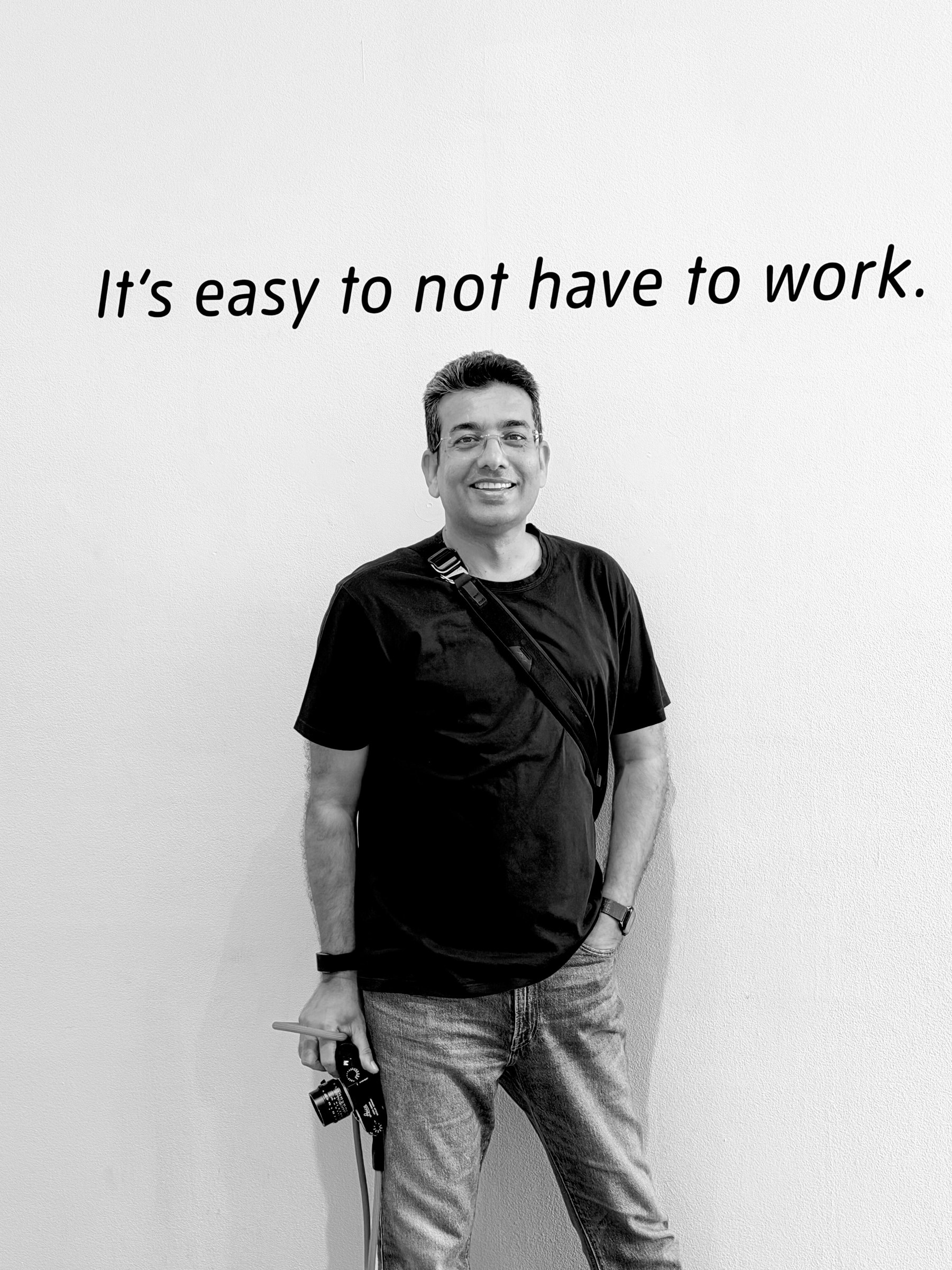
It is easy to not have to work! A good reminder at the Tate Modern, London.
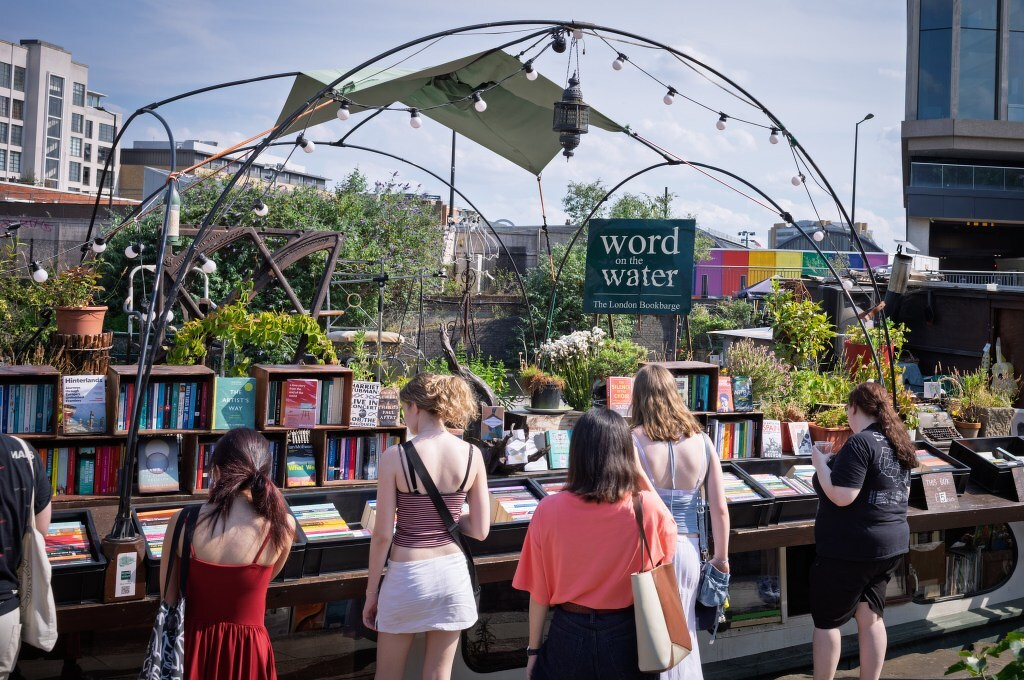
Word on Water
I love reading and I love exploring bookshops. Word on the Water, a barge bookshop on Regent’s Canal, is quirky and cute. The shelves are short and the selection is opinionated.
Not a place to find the latest bestseller or the instagram viral book that book-influencers are promoting .. you are not meant to find everything you are looking for but you will surely find something that will intrigue you.


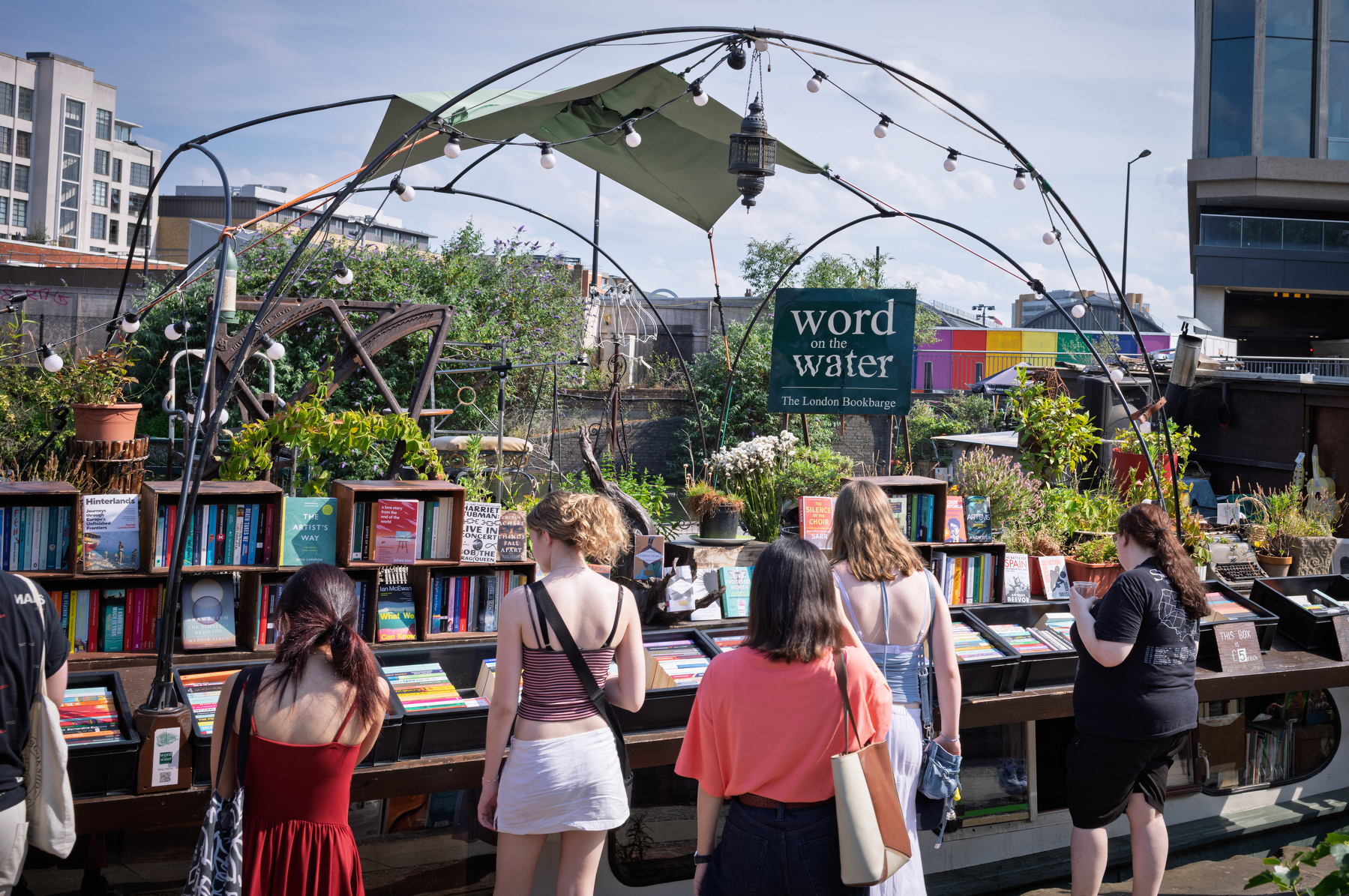
Word on Water, London
I love reading and I love exploring bookshops. Word on the Water, a barge bookshop on Regent’s Canal, is quirky and cute. The shelves are short and the selection is opinionated.
Not a place to find the latest bestseller or the instagram viral book that book-influencers are promoting .. you are not meant to find everything you are looking for but you will surely find something that will intrigue you.


The Bookshop Inc, Delhi.


I was expecting more from the WWDC this time. This seems underwhelming. The only thing worth mention is Shortcuts. And yes, Fantastical subscription might not be needed anymore.
One of my most critical requirements from my browsers is to have pinned tabs logged in and updated. There are several sites that I use on regular basis and I do not want them to log out with my browser session ending or restart of my device. Unfortunately there are very few browsers who get this right. So far, Arc seems to be handling the best but it has other challenges. Opera and Vivaldi work but not seamlessly. Safari and Firefox have their own challenges. Brave works but its strict privacy setting causes problem with some sites.
There are many things that continue in ‘default mode’ simply because there is no incentive to change them, or because we are either too lazy or simply do not care. Sometimes, life itself operates in default mode. It just goes on, and there is no impetus to shift anything.
Currently reading: Departure(s) by Julian Barnes 📚
Promise to never look away again
Why do we even need to visit historical concentration camps or genocide memorials?
Why do we visit places that hold so much pain?
Because they serve as a visceral reminder of the nadir of our own humanity. Because they force you to make a silent promise to never look away again.
Dachau Concentration Camp, Munich


Finished reading: The Year of Magical Thinking by Joan Didion 📚
A $179 Million Carbon Market Lesson: KOKO Networks and Its Clean Cooking Play
Since 2008, I have worked in different roles and geographies on getting clean cooking solutions to poor households. In those early days, the sector got little of the financial creativity flowing toward utility-scale solar and large carbon portfolios. But the emerging carbon credit play under the Clean Development Mechanism gave us real hope: that household air pollution and biomass-driven emissions could be addressed if we used carbon revenues to make clean cooking genuinely affordable.
Eighteen years on, carbon markets have attracted unprecedented attention from the private sector, development finance institutions, and governments. The rise and fall of KOKO Networks is a milestone in that journey. It demands we acknowledge the market’s potential and take responsibility for building it better.

A $179 Million Learning Bill for Carbon Finance
KOKO Networks is a company I have cited many times as an example of what clean cooking success looks like. Founded in Kenya in 2013-14, KOKO built a bioethanol cooking solution and made it accessible at subsidised prices: stoves at KES 1,500 against a market price of over KES 10,000, and ethanol at KES 100 per litre against KES 200.They reached more than 1.5 million households by leveraging carbon credits revenue from compliance carbon buyers. That distinction matters enormously and I will come back to it.
The model attracted serious capital. Over $100 million from Mirova, Rand Merchant Bank, and the Microsoft Climate Innovation Fund. In 2024, the World Bank’s MIGA arm extended a $179.64 million guarantee to support expansion to 3 million households.
On January 31, 2026, KOKO filed for liquidation and laid off all 700 staff. The trigger was their failure to secure a Letter of Authorisation from the Kenyan government under its Climate Change (Carbon Markets) Regulations 2024. Disagreements over revenue share and credit volumes proved irresolvable. Without the LoA, KOKO’s credits could not be sold in the compliance market, revenue collapsed, and 1.5 million households now face a return to charcoal.
The collapse of KOKO Networks triggered a wave of reactions from investors reassessing sovereign risk, to carbon market sceptics citing it as proof of the model’s fragility. I understand those reactions. But these reactions do not factor in that carbon markets and carbon projects have many nuances and they operate under different mechanism with different rule books, different architecture and different outcomes.
Two Markets, Two Rule Books
The voluntary carbon market and the compliance carbon market are architecturally distinct, with different purposes and different rule books.
The voluntary carbon market exists to mobilise additional climate action beyond what regulation requires. When a corporation buys a voluntary carbon credit, it directs private capital toward climate impact the mandatory system often doesn’t reach. Projects certified under Verra or Gold Standard can issue credits to corporate buyers without host country Letters of Authorisation and without triggering corresponding adjustments in national accounts. The voluntary market lane remains open regardless of LoA status.
What KOKO’s model required was the premium that compliance-grade, Article 6-authorised credits command. At voluntary market pricing, the subsidy engine serving 1.5 million households simply did not work. The LoA was not a regulatory formality. It was the most critical component of the entire compliance carbon market project.
A Maturing Market, Not a Broken One
What happened to KOKO is being read by many as evidence of carbon market failure. I read it differently. It is a sign of a maturing market and the disruption that maturation brings for projects built on older assumptions.
Article 6 of the Paris Agreement is increasingly being operationalised, reflecting serious national intent to meet climate commitments. Under Article 6.2 and 6.4, credits used for compliance purposes now require a corresponding adjustment: the host country formally gives up that emissions reduction from its own national accounting. Kenya cannot count the same reduction toward its NDC and sell it to a compliance buyer abroad.
Kenya’s insistence on negotiating revenue share before issuing an LoA will soon become a standard part of every government’s playbook. It is a government exercising legitimate discretion over what has become a geopolitical asset. Zimbabwe, Tanzania, and Indonesia have taken similar positions, imposing moratoriums or review frameworks on carbon credit authorisations for the same underlying reason. KOKO’s mistake was overestimating the value of its government MoU and underestimating the discretionary nature of the LoA. A framework agreement is a relationship document. A Letter of Authorisation is a sovereign instrument. KOKO built a $300 million business model in the gap between them.
Growing Pains, Not Doom
This case should not be read as a doomsday signal. Ghana, Thailand, Guyana, Suriname, and Vanuatu have all issued LoAs successfully. Singapore has signed bilateral Article 6 agreements with more than 25 countries. As of March 2025, 97 bilateral agreements under Article 6.2 have been signed across 59 countries. The architecture is being built.
The KOKO failure was the result of building a financial model on compliance-grade assumptions without compliance-grade regulatory certainty. The lesson is not that carbon markets don’t work. It is that the compliance market requires a fundamentally different approach to sovereign partnership and regulatory sequencing than the voluntary market playbook most of us learned on. The LoA must be secured before capital is deployed, not treated as a problem to resolve once the business is running.
Carbon markets are growing up and there will be pain in that process. We need to let go of old assumptions and engage with this emerging market in a new light, as its rule book, safeguards, and drivers keep evolving.
The Collateral Damage
1.5 million households who had access to cleaner, cheaper fuel are reverting to charcoal. Seven hundred people lost their jobs. The WHO estimates that household air pollution from solid fuel combustion causes approximately 3.2 million premature deaths globally each year, with Sub-Saharan Africa bearing a disproportionate share. When carbon markets succeed, the benefits are diffuse and global. When they fail, the costs are local and immediate, falling on those with the least resilience. The MIGA guarantee protected investors. Unfortunately the households, and the 700 who lost their jobs, had no such protection.
Suggested Reading
Here are some key documents that underpin arguments in this article. Recommended for practitioners, investors, and policymakers working in carbon markets and clean cooking finance.
UNFCCC and Paris Agreement Frameworks
- UNFCCC. Article 6 of the Paris Agreement. The primary legal text governing international carbon market cooperation, corresponding adjustments, and the LoA framework.
- UNFCCC. Key Outcomes from COP29: Article 6 of the Paris Agreement. The official COP29 document finalising nine years of Article 6 negotiations, establishing the dual-registry system and compliance standards.
- UNFCCC. COP26 Glasgow Climate Pact: Article 6 Outcomes. The foundational 2021 rulebook that made corresponding adjustments a requirement for compliance-grade credits.
World Bank
- World Bank. State and Trends of Carbon Pricing 2025. The most current annual benchmark report on carbon pricing instruments globally, noting growing compliance demand including from clean cooking projects.
- World Bank. State and Trends of Carbon Pricing 2024. Covers the interaction between voluntary and compliance carbon credit markets, with data on pricing, coverage, and revenue across 75 instruments worldwide.
WHO
- WHO. Household Air Pollution and Health. The authoritative fact sheet on health impacts of solid fuel combustion, including the 3.2 million annual premature deaths attributed to household air pollution.
Carbon Market Integrity
- ICVCM. Core Carbon Principles. The Integrity Council for the Voluntary Carbon Market’s standard-of-standards framework, establishing minimum quality requirements for voluntary carbon credits.
What I Read in 2025
As usual, my last year’s reading was split between deliberate explorations and guilty pleasures. The thrillers, murder mysteries, and crime fiction were my airport reading and guilty pleasures, feeding the inner child who grew up on comics and superhero books. But many others were deliberate choices, and those are worthy of reflection.
The deliberate selections reflect my acknowledgment of the limited time I have and the many authors and themes I am yet to explore. These selections also reflect a rebellion against reading patterns and comfort zones, pushing me to explore what is less likely to find a place in my reading list.
Breakneck by Dan Wang was a very deliberate pick and turned out to be one of the best books I have read on China. I have been following Dan Wang and his annual letters (superb expositions of long-form writing that present his layered observations on China) on his blog. This is essential reading for anyone who wants an informed, honest, and insightful commentary on China’s rise as an economic and manufacturing powerhouse.
Ian McEwan and Italo Calvino are two authors who have been on my reading list, and this year I managed to pick one book from each. Ian McEwan’s Atonement and Amsterdam were the two books waiting for me, but I picked up his latest, What We Can Know. The blurb and reviews drew me in. This literary page-turner takes us to a post-climate apocalyptic world and provides commentary from the lens of future generations. It overpowered my hesitation to pick up dystopian fiction (I have read quite a few recently) and this book became my first Ian McEwan book.
I am not sure how I ended up picking Invisible Cities out of the three Italo Calvino books on my reading list. It gives a glimpse of what Calvino can produce, though it is not the typical entry point to his work. Considered a masterpiece for its structure and innovative narration, it is his meditation on modern society and cities, but not the most readable Calvino. Still, there is something quietly powerful about spending time in cities that exist only in language and imagination. I need to read another book by him to know his work better.
I don’t usually read travelogues, but I have read quite a few. What I love about them is how different authors connect with the same places, cultures, and rituals, and how their reflections bring out unique dimensions we often miss. Travelogues often emerge from an immersive interplay between the physical world and an individual’s worldview and experiences. The same roads, buildings, and cities get transformed by the observer’s unique perspective and accumulated experiences. Aatish Taseer’s liminal existence brings that interplay vividly to life in A Return to Self. Gay, born out of wedlock, son of a Hindu journalist and Pakistani politician, anti-establishment (he also authored the controversial Time magazine cover story on our Prime Minister), his liminal positioning entitles him to offer a unique perspective and commentary on Turkey, Spain, Mexico, and obviously India. Interestingly, Invisible Cities can easily be read as a travelogue of cities that don’t exist.
Mother Mary Comes to Me was an automatic inclusion in my list even before the book was released. I grew up immersed in the extraordinary story of a debut author securing half a million pounds for her first book and becoming a celebrity even for those who never read books and had no idea what the Booker Prize was, all before I got my hands on a borrowed copy of The God of Small Things. I witnessed her fame, notoriety, rebellion, and controversies. Her memoir promised to satisfy my curiosity about how that book came to be and what happened to her afterward and to some extent it did.
I also reread Siddhartha after almost two decades. The two decades have changed me, and the context of reading the book has changed. Interestingly, the book itself expands on the changing nature of our experience and the world around us. To paraphrase the saying that you cannot step in the same river twice: you cannot read the same book twice. The book is not the same, and the reader is not the same. The first time I read this book, it was one of the few books with me in the hinterland of a Francophone African nation. Over the years, the book had been reduced to an entry in my reading list. This time it was a deliberate choice, and now I am making a list of books I should reread. We must reread the books that we love (or we hate).
Non-Fiction
- The Teaching of Ramana Maharishi in His Own Words
- The Message by Ta-Nehisi Coates
- When Things Fall Apart by Prema Chodron
- A Return to Self by Aatish Taseer
- Breakneck by Dan Wang
- Mother Mary Comes to Me by Arundhati Roy
- How To Think Life Socrates by Donald J Robertson
- Why the Poor Don’t Kill Us by Manu Joseph
- Help by Oliver Burkeman
- Tiny Experiments by Anne Laure Le Cunff
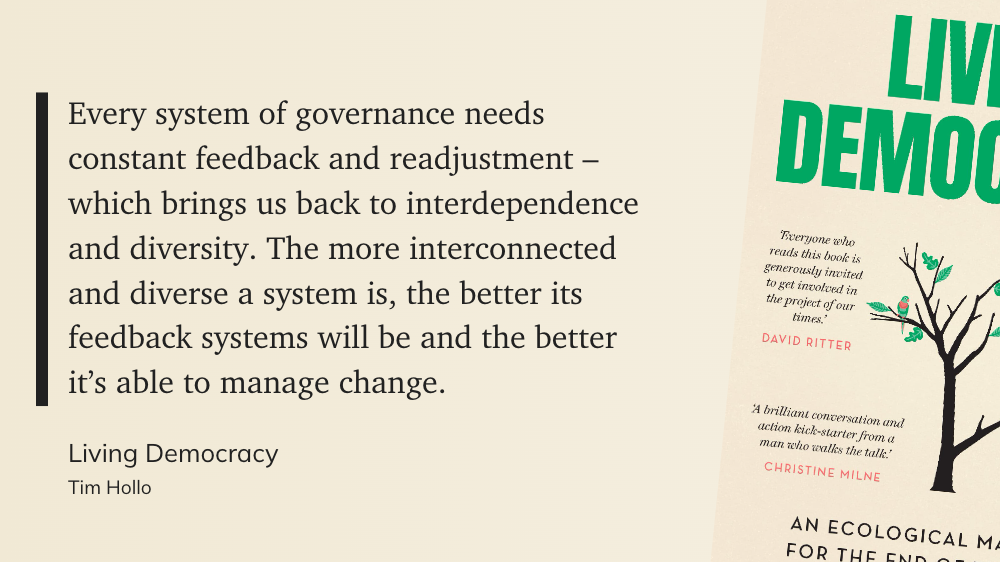
- Living Democracy by Tim Hollo
Fiction
- Invisible Helix by Keigo Higashino
- Nemesis by Gregg Hurwitz
- The Final Curtain by Keigo Higashino
- The Informationist by Taylor Stevens
- In Too Deep by Lee Child
- Rock Paper Scissors by Alice Feeney
- A Spell of Good Things by Ayobami Adebayo
- The Housemaid by Frieda McFadden
- The Secret of Secrets by Dan Brown
- Invisible Cities by Italo Calvino
- Naukar Ki Kameez by Vinod Kumar Shukla
- Pratinidhi Kahaniyan of Uday Prakash
- Siddhartha by Hermen Hesse
- What We Can Know by Ian McEwan
The post What I Read in 2026 appeared first on Santosh.
20 years back many of us got a platform that significantly shaped who we are. IFMR Research (although then it was known by many other names of its constituents) is where I spent 6 years of formative years of my career) and built friendships that we cherish everyday. A couple of weeks ago we got together at the launch of its Alumni Network. #memories


Still tweaking my linux setup on my laptop but seems quite close to what I would stick with. Fedora 43. Zorin OS had some challenges with the graphics driver and the way they have implemented the package manager which resulted in many apps not having enough permissions and requiring futher tweak to work. Fedora with thirdparty repositories enabled works smooth.
Zorin OS just revived my 3 year old Windows machine. Now I am realizing how so many background syncs and processes (those we have no control and often cannot figure out what they are doing) make our machine so slow and power hungary. The battery life improved, speed improved and it has a very light footprint.
Started the year with a 10 day Vipassana course. This was a long due. In fact, the first time I had applied for it was almost a decade back but could not join due to some urgency on the work front.