
Photo Memories
- UNFCCC. Article 6 of the Paris Agreement. The primary legal text governing international carbon market cooperation, corresponding adjustments, and the LoA framework.
- UNFCCC. Key Outcomes from COP29: Article 6 of the Paris Agreement. The official COP29 document finalising nine years of Article 6 negotiations, establishing the dual-registry system and compliance standards.
- UNFCCC. COP26 Glasgow Climate Pact: Article 6 Outcomes. The foundational 2021 rulebook that made corresponding adjustments a requirement for compliance-grade credits.
- World Bank. State and Trends of Carbon Pricing 2025. The most current annual benchmark report on carbon pricing instruments globally, noting growing compliance demand including from clean cooking projects.
- World Bank. State and Trends of Carbon Pricing 2024. Covers the interaction between voluntary and compliance carbon credit markets, with data on pricing, coverage, and revenue across 75 instruments worldwide.
- WHO. Household Air Pollution and Health. The authoritative fact sheet on health impacts of solid fuel combustion, including the 3.2 million annual premature deaths attributed to household air pollution.
- ICVCM. Core Carbon Principles. The Integrity Council for the Voluntary Carbon Market’s standard-of-standards framework, establishing minimum quality requirements for voluntary carbon credits.
A $179 Million Carbon Market Lesson: KOKO Networks and Its Clean Cooking Play
Since 2008, I have worked in different roles and geographies on getting clean cooking solutions to poor households. In those early days, the sector got little of the financial creativity flowing toward utility-scale solar and large carbon portfolios. But the emerging carbon credit play under the Clean Development Mechanism gave us real hope: that household air pollution and biomass-driven emissions could be addressed if we used carbon revenues to make clean cooking genuinely affordable.
Eighteen years on, carbon markets have attracted unprecedented attention from the private sector, development finance institutions, and governments. The rise and fall of KOKO Networks is a milestone in that journey. It demands we acknowledge the market’s potential and take responsibility for building it better.

A $179 Million Learning Bill for Carbon Finance
KOKO Networks is a company I have cited many times as an example of what clean cooking success looks like. Founded in Kenya in 2013-14, KOKO built a bioethanol cooking solution and made it accessible at subsidised prices: stoves at KES 1,500 against a market price of over KES 10,000, and ethanol at KES 100 per litre against KES 200.They reached more than 1.5 million households by leveraging carbon credits revenue from compliance carbon buyers. That distinction matters enormously and I will come back to it.
The model attracted serious capital. Over $100 million from Mirova, Rand Merchant Bank, and the Microsoft Climate Innovation Fund. In 2024, the World Bank’s MIGA arm extended a $179.64 million guarantee to support expansion to 3 million households.
On January 31, 2026, KOKO filed for liquidation and laid off all 700 staff. The trigger was their failure to secure a Letter of Authorisation from the Kenyan government under its Climate Change (Carbon Markets) Regulations 2024. Disagreements over revenue share and credit volumes proved irresolvable. Without the LoA, KOKO’s credits could not be sold in the compliance market, revenue collapsed, and 1.5 million households now face a return to charcoal.
The collapse of KOKO Networks triggered a wave of reactions from investors reassessing sovereign risk, to carbon market sceptics citing it as proof of the model’s fragility. I understand those reactions. But these reactions do not factor in that carbon markets and carbon projects have many nuances and they operate under different mechanism with different rule books, different architecture and different outcomes.
Two Markets, Two Rule Books
The voluntary carbon market and the compliance carbon market are architecturally distinct, with different purposes and different rule books.
The voluntary carbon market exists to mobilise additional climate action beyond what regulation requires. When a corporation buys a voluntary carbon credit, it directs private capital toward climate impact the mandatory system often doesn’t reach. Projects certified under Verra or Gold Standard can issue credits to corporate buyers without host country Letters of Authorisation and without triggering corresponding adjustments in national accounts. The voluntary market lane remains open regardless of LoA status.
What KOKO’s model required was the premium that compliance-grade, Article 6-authorised credits command. At voluntary market pricing, the subsidy engine serving 1.5 million households simply did not work. The LoA was not a regulatory formality. It was the most critical component of the entire compliance carbon market project.
A Maturing Market, Not a Broken One
What happened to KOKO is being read by many as evidence of carbon market failure. I read it differently. It is a sign of a maturing market and the disruption that maturation brings for projects built on older assumptions.
Article 6 of the Paris Agreement is increasingly being operationalised, reflecting serious national intent to meet climate commitments. Under Article 6.2 and 6.4, credits used for compliance purposes now require a corresponding adjustment: the host country formally gives up that emissions reduction from its own national accounting. Kenya cannot count the same reduction toward its NDC and sell it to a compliance buyer abroad.
Kenya’s insistence on negotiating revenue share before issuing an LoA will soon become a standard part of every government’s playbook. It is a government exercising legitimate discretion over what has become a geopolitical asset. Zimbabwe, Tanzania, and Indonesia have taken similar positions, imposing moratoriums or review frameworks on carbon credit authorisations for the same underlying reason. KOKO’s mistake was overestimating the value of its government MoU and underestimating the discretionary nature of the LoA. A framework agreement is a relationship document. A Letter of Authorisation is a sovereign instrument. KOKO built a $300 million business model in the gap between them.
Growing Pains, Not Doom
This case should not be read as a doomsday signal. Ghana, Thailand, Guyana, Suriname, and Vanuatu have all issued LoAs successfully. Singapore has signed bilateral Article 6 agreements with more than 25 countries. As of March 2025, 97 bilateral agreements under Article 6.2 have been signed across 59 countries. The architecture is being built.
The KOKO failure was the result of building a financial model on compliance-grade assumptions without compliance-grade regulatory certainty. The lesson is not that carbon markets don’t work. It is that the compliance market requires a fundamentally different approach to sovereign partnership and regulatory sequencing than the voluntary market playbook most of us learned on. The LoA must be secured before capital is deployed, not treated as a problem to resolve once the business is running.
Carbon markets are growing up and there will be pain in that process. We need to let go of old assumptions and engage with this emerging market in a new light, as its rule book, safeguards, and drivers keep evolving.
The Collateral Damage
1.5 million households who had access to cleaner, cheaper fuel are reverting to charcoal. Seven hundred people lost their jobs. The WHO estimates that household air pollution from solid fuel combustion causes approximately 3.2 million premature deaths globally each year, with Sub-Saharan Africa bearing a disproportionate share. When carbon markets succeed, the benefits are diffuse and global. When they fail, the costs are local and immediate, falling on those with the least resilience. The MIGA guarantee protected investors. Unfortunately the households, and the 700 who lost their jobs, had no such protection.
Suggested Reading
Here are some key documents that underpin arguments in this article. Recommended for practitioners, investors, and policymakers working in carbon markets and clean cooking finance.
UNFCCC and Paris Agreement Frameworks
World Bank
WHO
Carbon Market Integrity
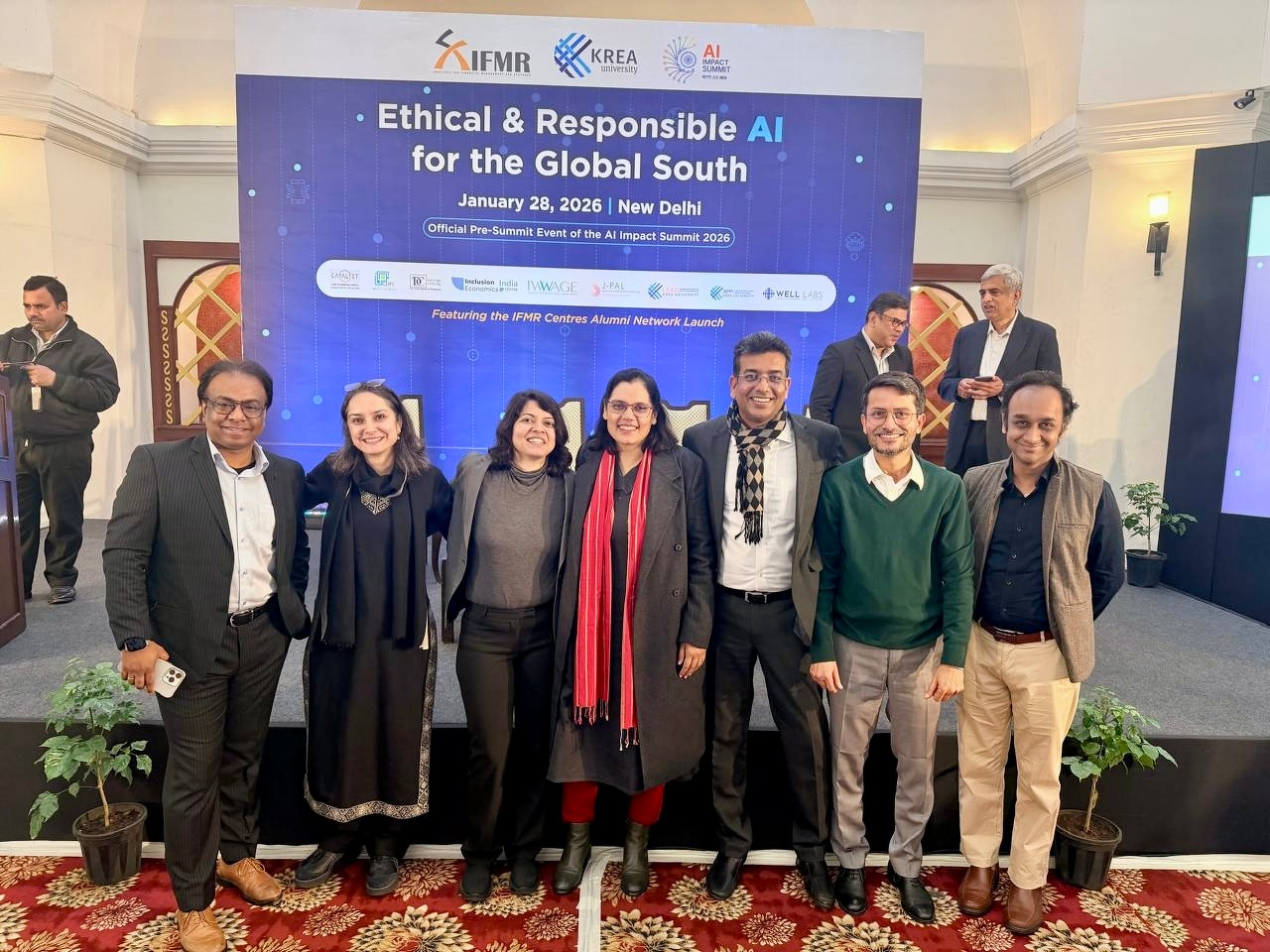
20 years back many of us got a platform that significantly shaped who we are. IFMR Research (although then it was known by many other names of its constituents) is where I spent 6 years of formative years of my career) and built friendships that we cherish everyday. A couple of weeks ago we got together at the launch of its Alumni Network. #memories


Started the year with a 10 day Vipassana course. This was a long due. In fact, the first time I had applied for it was almost a decade back but could not join due to some urgency on the work front.
Sankalp Bharat 2025
Last Friday, I moderated the opening plenary of the Sankalp Bharat 2025 to explore the next phase of transformation of Indian agriculture. We didn’t just discuss problems but mapped the big shifts required for Indian agriculture over the next decade.
Here are four things we all agreed we must work towards:
Tech led transformation: Leveraging AI and digital infrastructure is critical to democratising access to finance and markets for smallholder farmers.
Climate resilience: The shift towards climate-smart farming and decarbonised value chains is not just an environmental necessity but a driver for long term economic stability.
Access to affordable capital: Indian farmers and farm enterprises need access to affordable capital and insurance products. We need to leverage our regional rural banks, agriculture financing institutions to unlock more capital and risk mitigation instruments.
Collaborative impact: Real change requires deep synergy between agtech innovators, investors, and policymakers to solve for scale and sustainability.

The post Sankalp Bharat 2025 appeared first on Santosh.
RESTORE 2025

The Economics of Restoration is complicated. And, the context specific nature of interventions make it even more difficult to have commercial capital flow in these interventions for scale. But restoration of our land and food system is critical and cannot be de-prioritized just because our existing frameworks of pricing and financing are unable to do justice to them.
India’s restoration needs a dedicated institution that owns this agenda and builds the required capabilities and takes responsibility of mobilizing and channelizing capital to this space.
Above are the key points of my contribution on the panel at RESTORE 2025. Very happy to see that we are having more dedicated conversation and convening on Restoration.
The post RESTORE 2025 appeared first on Santosh.
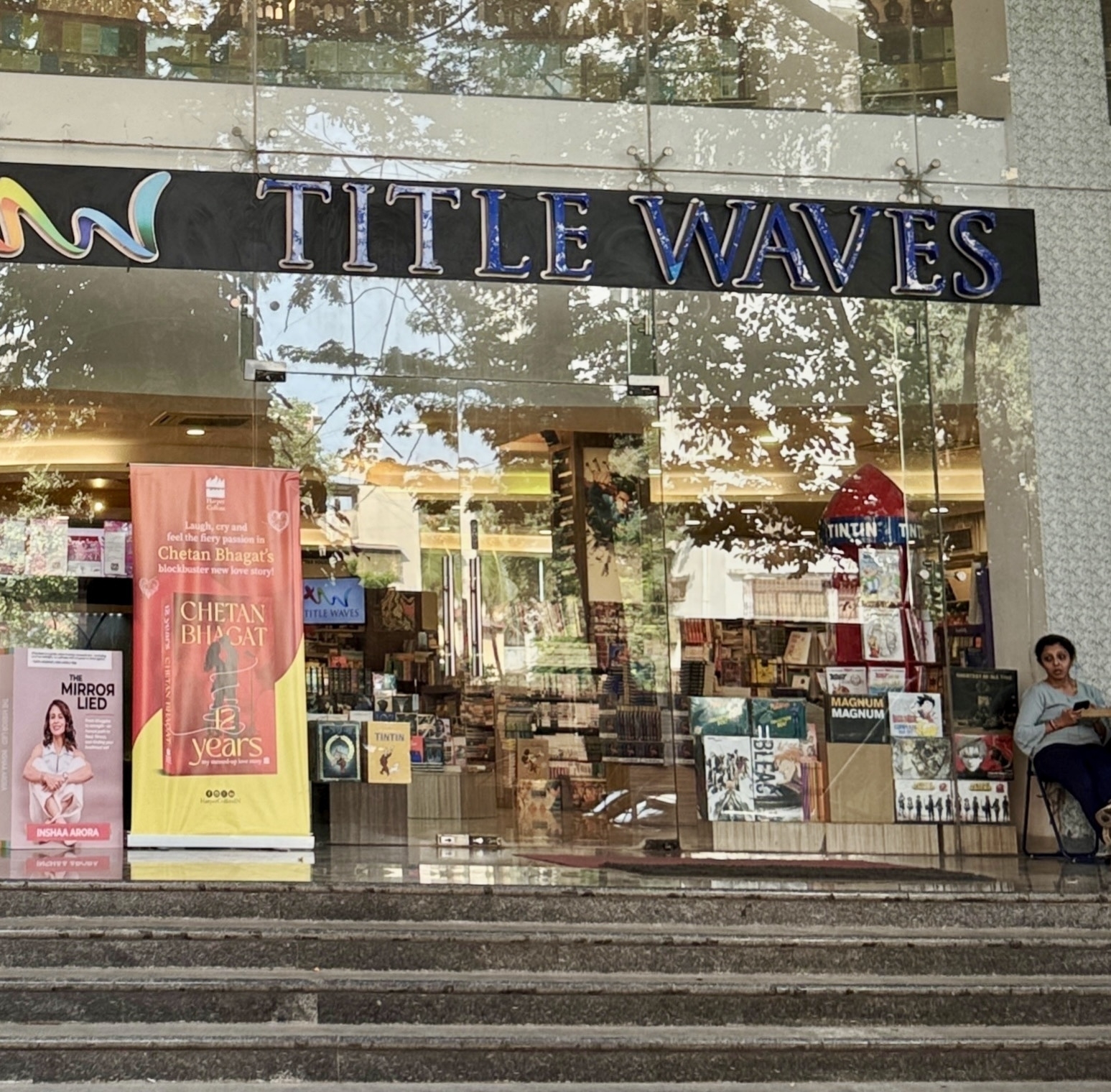
Always good to see independent bookshop thriving. Title Wave, Mumbai. #Mumbai #Bookshops
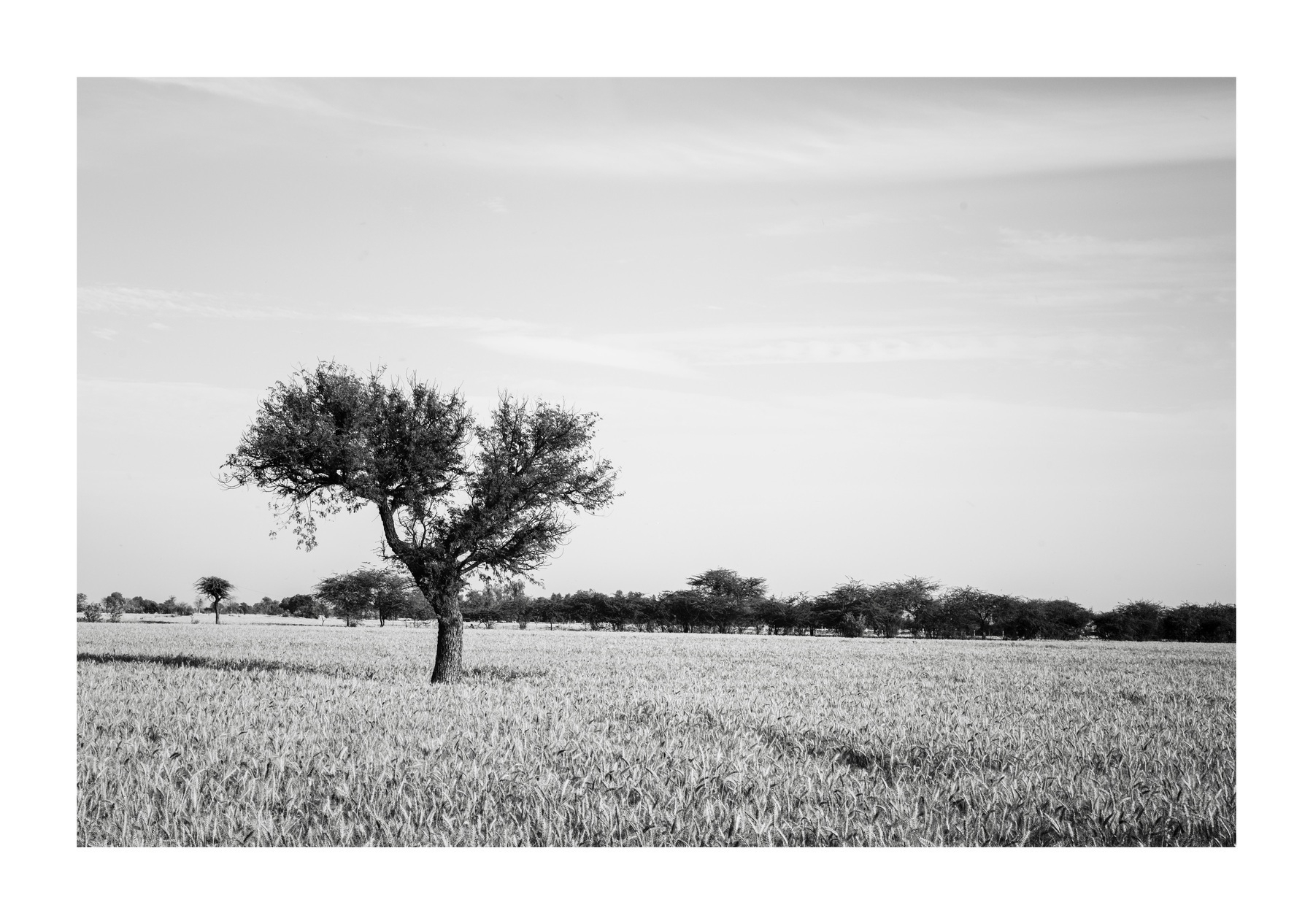
Somewhere in Cooch Behar district .. exploring how communities can leverage Agroforestry practices.

Ganga Mahal Ghat, Varanasi (2015)

The sky was intriguing and the landscape was soothing! #London #BlackAndWhite #iPhone

Walking around in London. The clean air and the buildings and locations with many fragments of history attached to them is quite inviting to get out and walk.


The Destroyer of Bird Nests

The Sentinel
The flagstaff tower, Delhi

The colors of spring from our garden

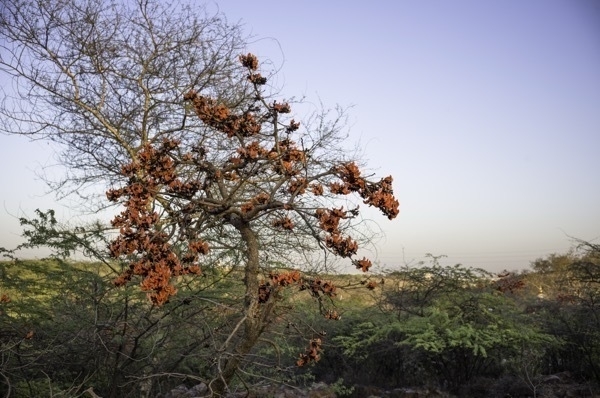
The flame of forest - Palash
Reminiscing our GIZ days
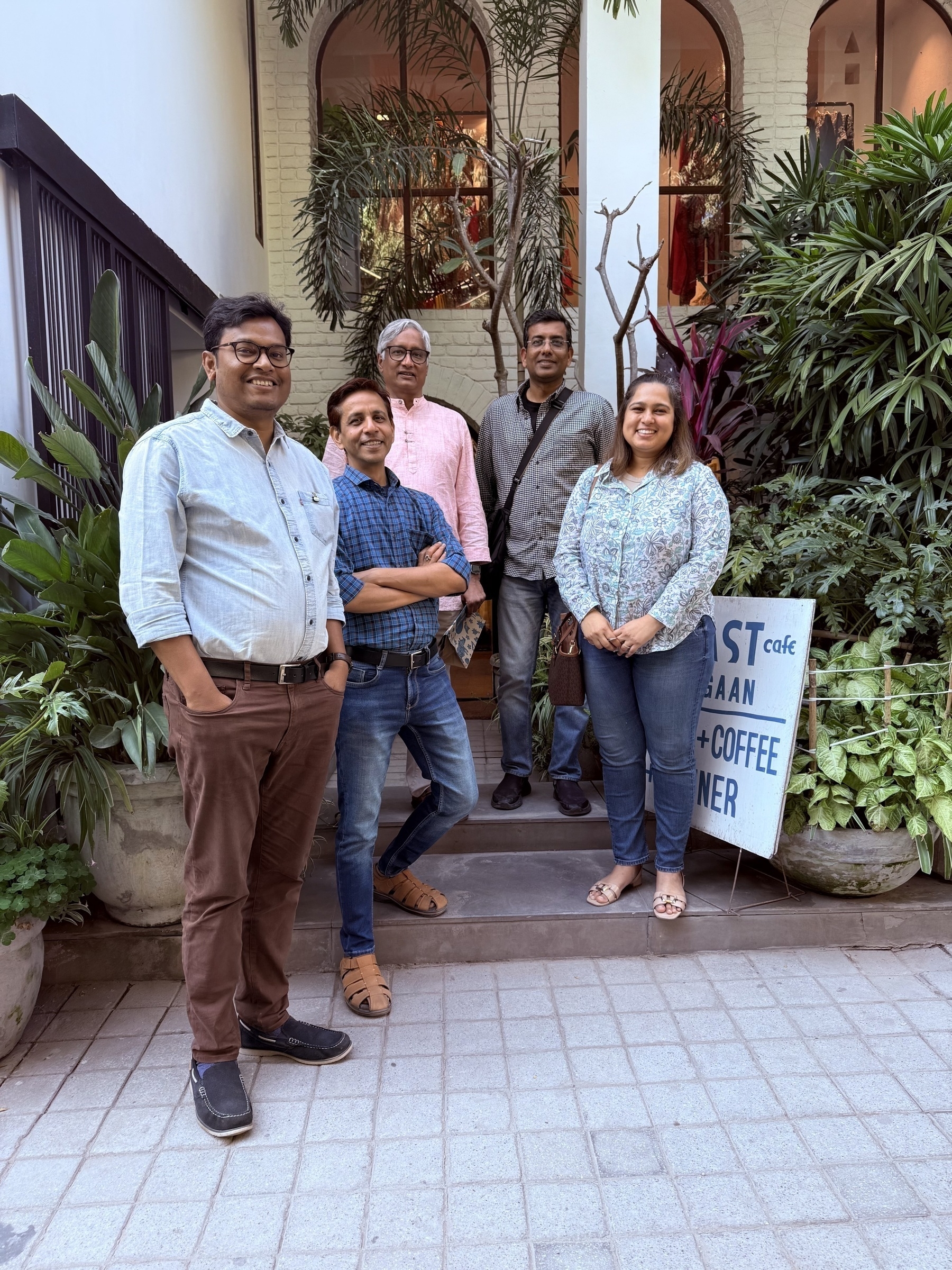
It has been over 12 years since I moved to Delhi to join GIZ’s Renewable Energy team. Leaving IFMR in Chennai for a short-term project at GIZ—one that was set to end in just eight months—was a significant decision. I took the leap with the hope that a second phase of the project would extend our time at GIZ, and fortunately, I ended up working there for nearly three years. It turned out to be a professionally enriching and transformative experience.
Today, I had the pleasure of reconnecting with some old colleagues and meeting new ones who are now part of the same programs we once worked on. The best part of our GIZ journey is that all of us continue to contribute to energy transition and climate solutions in different capacities. No matter where we are, our paths keep crossing, reinforcing the strong professional network we built during our time at GIZ.
Transforming Agriculture in the Global South – The South-South Agriculture Alliance

I strongly believe that innovative AgTechs can address some of the most pressing problems of the smallholder farmers and small producers. India has been a hub of AgTech innovation and several solutions that have proven themselves in India are now looking to take their solutions to other global south countries.
As part of South South Agriculture Alliance (SSAGA) we are working on innovation and technology transfer across the global south with aim to transform agriculture for the small producers and small farmers. The first cohort of our SSAGA entrepreneurs are already forging their partnership in the Africa region.
It is a pleasure to work with these exciting companies and host them at Sankalp Forum at Nairobi. Watch out for these firms..
WRMS – Innovative insurance products for climate risk facded by the smallholder farmers.
WhrrL – A wharehouse receipt based loan for smallholder farmers that is leveraging blockchain to for building trust and transparency for the lenders
SatSure – Crop yield-management, monitoring and agriculture advisory to farmers using deep-tech (satellite remote sensing, machine learning and AI)
ScaNxt – Affordable soil-testing and other solutions for smallholder farmers
Prompt Innovations – Affordable and sustainable milk chilling solutions for small milk producers.
Afsanah Guest House, Auroville


Some flowers for Shri Ganesha, Auroville 2025
