Santosh
About Me Archive Photos Bookshelf Search Stats Also on Micro.blog
  • What I read in 2024

    My reading goals used to be overly ambitious, leaving me frustrated at year’s end. I’d inevitably read less than I planned. But this year, I focusse more on engaged and slow reading than meeting my quantiative reading goals. I engaged more deeply with my books, becoming more selective, particularly with non-fiction. The books I chose lingered long after the final page, largely because they addressed questions that have become increasingly pressing as I navigate the, shall we say, defining stage of mid-life. These questions have shaken me up, prompting a re-evaluation of my priorities and preferences.

    This new approach meant I was quick to abandon books that didn’t resonate. I think that 10-15 books were left unfinished after reading just a small portion of them. Some, mostly non-fiction, weren’t inherently bad in terms of content, but they felt better suited to a blog post or essay rather than a full-length book. A quick glance at the chapter titles and blurbs revealed the core message, and if the writing didn’t elevate that message, I saw no reason to continue when a bookshelf full of carefully chosen books awaited their turn.

    The abandoned books weren’t necessarily poor reads; they simply failed to capture my attention. Some examples include:

    • Same As Ever: A Guide To What Never Changes by Morgan Housel
    • Give and Take: A Revolutionary Approach To Success by Adam Grant
    • Hidden Potential: The Science of Achieving Greater Things by Adam Grant
    • Supercommunicators: How to Unlock the Secret Language of Connection by Charles Duhigg
    • Slow Productivity by Cal Newport
    • Meditations for Mortals by Oliver Burkeman

    Interestingly, all these books are from authors whose previous work I’ve enjoyed, which is why they made it onto my list. They also fall, broadly speaking, into the self-help category, although Oliver Burkeman might object to this label. His book The Antidote: Happiness for People Who Can’t Stand Positive Thinking dissected popular self-help advice and challenged readers to think beyond conventional notions of success and achievement.

    So, what kind of books did engage me this year? The books that forced me to pause, close the cover, and truly contemplate their message. These books provided new contexts for existing questions and raised new ones altogether. Travis Rieder’s Catastrophe Ethics: How To Choose Well in a World of Tough Choices felt like an internal dialogue, prompting me to revisit my lifestyle choices and my individual response to climate change. It was the slowest read of the year, as I frequently stopped to examine familiar questions articulated in new and challenging ways, unraveling and reweaving the threads of my understanding.

    Another book that demanded careful perusal of each chapter was Jonathan Haidt’s The Righteous Mind: Why Good People Are Divided by Politics and Religion. Haidt masterfully lays the groundwork, providing ample context before addressing the central question presented in the title. His approach is both edifying and illuminating. I was motivated to read it this year by the New York Times review of this book (I had a couple of other books with similar themes on my list), and I am glad that I did. Both Catastrophe Ethics and The Righteous Mind are now my go-to recommendations. The former provides guidance on individual action in the face of the climate crisis, while the latter tackles the billion-dollar question of why political and religious divides persist. In fact, every non-fiction book I finished this year is well worth your time.

    While my fiction reading is typically dominated by crime fiction, this year I delved into more literary fiction and explored new authors. Two standouts were Sophie Ward’s Love and Other Thought Experiments and Durian Sukegawa’s Sweet Bean Paste. Though vastly different, both offered a delightful reading experience. The former is a philosophical exploration of “thought experiments” that transcends genre, while the latter is a poignant tale about the meaning of life and how to live it fully. The philosophy backgrounds of both authors shine through in their writing.

    Non-fiction 

    • Wanting – The Power of Mimetic Desire in Everyday Life by Luke Burgis
    • How Religion Evolved by Robin Dunbar
    • How to Know a Person- The Art of Seeing Others Deeply and Being Deeply Seen by David Brooks
    • Catastrophe Ethics – How to Choose Well in a World of Tough Choices by Travis Rieder
    • The Righteous Mind- Why Good People Are Divided by Politics and Religion by Jonathan Haidt

    Fiction

    • Orbital by Samantha Harvey
    • Sweet Bean Paste by Durian Sukegawa
    • Prophet Song by Paul Lynch
    • Love and Other Thought Experiments by Sophie Ward
    • Lone Wolf by Gregg Hurwitz
    • The Edge by David Baldacci
    • The Secret by Lee Child
    • The Twist of a Knife by Anthony Horowitz
    • To Die For by David Baldacci
    → 8:34 PM, Jan 17
    Also on Bluesky
  • Sweet Bean Paste -Meaning of Life

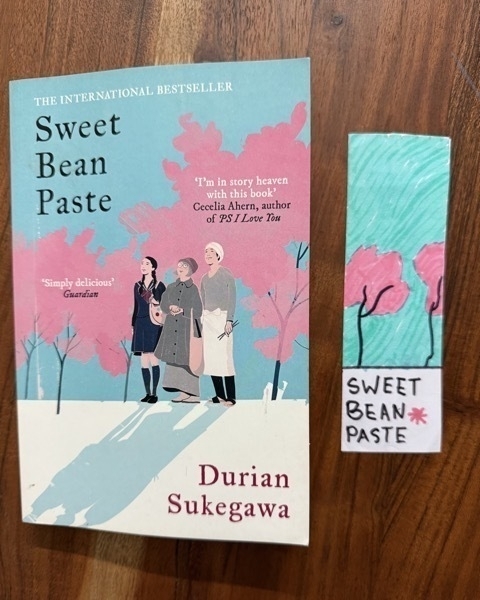
    “Is a life worth living even if it doesn’t seem to offer any value to anyone? This beautiful book by Durian Sukegawa (real name Tetsuya Akikawa) offers an answer in this heartwarming story of an old lady who decides to work for a dorayaki (a Japanese dessert) seller. The answer is, ‘There is meaning in every life.’


    P.S. The bookmark in the picture is made by my little daughter who is in love with bookmarks and books.”

    → 7:46 PM, Oct 13
  • Sweet Bean Paste is one such a sweet read. Absolutely loved this book for its simplicity, story and characters. And, it was a memorable read for some other reason as well- the beautiful bookmark created by Ameya for this book. 

    → 10:18 PM, Sep 23
    Also on Bluesky
  • What I read in 2023


    The absurdity of the hope that we will do things differently in the new year than what we did in the year gone by is mindboggling. Yet, hope and optimism force us to persist in our practice of making resolutions. Last year, I had planned to read copiously on the nexus of nature, climate change, and religion but barely managed to read a couple of books. This was part of my old practice of picking a theme and going deep on that subject. While the reading lists that I had for this year remained unconquered I devoured a lot of material on these topics. My shelf of half-read books is getting bigger and bigger. There are many great books worth reading and I have been made helpless by time poverty. Being selective is the only option.

    Non-fiction

    • Doppelganger by Naomi Klein
    • The Inevitable by Kevin Kelly
    • Excellent Advice for Living by Kevin Kelly
    • The Creative Act – A Way of Being by Rick Rubin
    • Life is Hard – How Philosophy Can Help Us Find Our Way by Kieran Setiya
    • Midlife by Kieran Setiya
    • Climate, Catastrophe and Faith by Philip Jenkins
    • Everything and Nothing by Tony Cartwright
    • The War of Art by Steven Pressfield
    • A Thousand Brains: A New Theory of Intelligence by Jeff Hawkins

    Fiction

    • The Year of Locust by Terry Hayes
    • Small Things Like These by Claire Keegan
    • The 6:20 Man by David Baldacci
    • The Last Orphan by Gregg Hurwitz
    • Long Shadows by David Baldacci

    2022 2021 2020 2019 2018(2) 2018(1) 2017(2) 2017(1) 2016 2015 2014 2013 2012 2011 2008  2007  2006

    → 4:30 PM, Jan 20
    Also on Bluesky
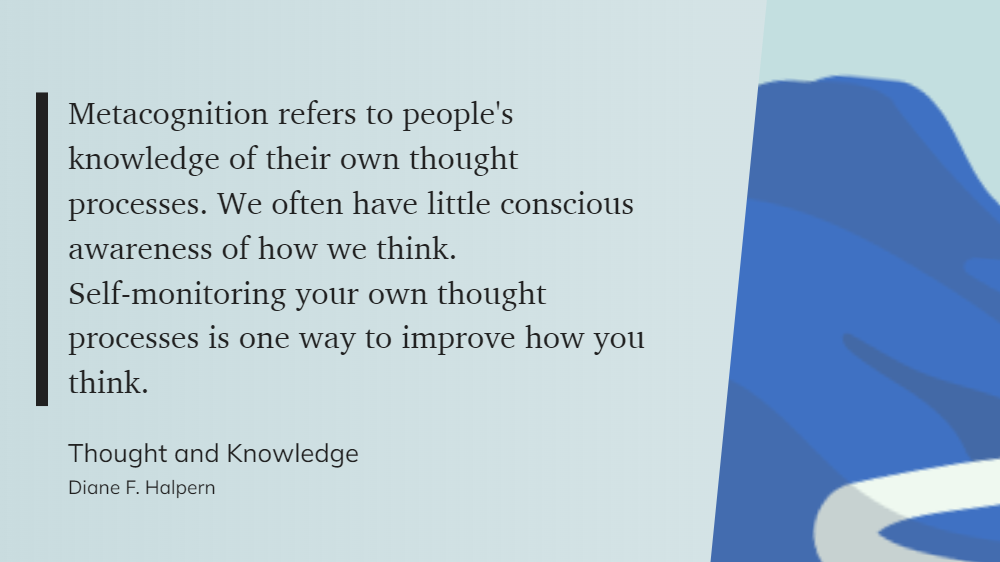
  • #Metacognition refers to people’s knowledge of their own thought processes. We often have little conscious awareness of how we think. Self-monitoring your own thought processes is one way to improve how you think." #CriticalThinking

    → 9:51 PM, Aug 30
    Also on Bluesky
  • “In the past, workers with average skills, doing an average job, could earn an average lifestyle. But, today, average is officially over. Being average just won’t earn you what it used to. It can’t when so many more employers have so much more access to so much more above average cheap foreign labor, cheap robotics, cheap software, cheap automation and cheap genius.” - Thomas Friedman

    → 9:50 PM, Jun 7
  • Finished reading: Desert Star by Michael Connelly 📚

    → 7:30 AM, May 28
  • Finished reading: The War Of Art: Break Through The Blocks And Win Your Inner Creative Battles by The War Of Art: Break Through The Blocks And Win Your Inner Creative Battles 📚

    → 7:46 AM, May 25
  • Finished reading: Small Things Like These by Claire Keegan 📚

    → 9:00 PM, May 22
  • My Reading List – 2022

    I already wrote about what happened with my reading routine and habit this year. But still managed to read some books. Here are the books that I finished this year. There are at least 3-4 books that I am done halfway and will include them in the next years list.

    • Four Thousand Weeks : Time Management for Mortals by Oliver Burman
    • The Psychology of Money by Morgan Housel
    • Don’t Even Think About It by George Marshall
    • All We an Save : Truth, Coverage and Solutions for the Climate Crisis
    • Where the Money Is by Adam Seessel 
    • A Line to Kill by Anthony Horowitz
    • The Postscript Murders by Elly Griffiths
    • The Maid by Nita Prose
    • Dark Horse by Gregg Hurwitz
    • The Anomaly by Herve Le Tellier 

    The first two in the list are recommended to anyone who is interested in reading books that fundamentally change your perspectives about many things. The first one changes the way you look at success, time, and life and the second one changes the way you look at money.

    Previous Years

    2021 2020 2019 2018(2) 2018(1) 2017(2) 2017(1) 2016 2015 2014 2013 2012 2011 2008  2007  2006

    → 10:47 AM, Jan 1
  • Malice - Another gem from Higashino

    Keigo Higashino is referred as ‘the Japanese Stieg Larsson’ on the cover of this book. I think this is a very bizarre comparison if I consider the plot and writing style of these two authors. The comparison can only be justified if we consider a) both write crime fiction, and b) both have been bestsellers in their respective countries. Anyway, I am happy if this comparison brings more people to read to this master storyteller’s work.
    Malice, written in 1996, is the third book by Higashino to be translated in to English from Japanese. The other two books “The Devotion of Suspect X” and “Salvation of a Saint” are among the best murder mysteries that I read in last five years. In both these books, readers were aware of who committed the crime but the mystery was how the murders were committed. In Malice, we know who committed the murder but the mystery was why the murder was committed.
    Kunihiko Hidaka, a bestselling author, was found dead by his wife Rie and friend Nonoguchi just before he was to move to a new country. Detective Kaga, ex-colleague of Nonoguchi, gets the responsibility of the case and soon he discovers major flaws in Nonoguchi’s alibi. Nonoguchi, a writer himself and aspiring to be a bestseller author like Hidaka, confesses his crime but there were many missing pieces in his confession about the motive of the crime.
    Higashino narrates the story through Nonoguchi’s and Kaga’s written accounts of the event during the investigation. The two main characters of Malice are writers and there is a lot of discussion of meeting timeline and writing styles, yet Higashino’s prose is bereft of any literary-ostentatiousness. Higashino is easy on his readers.
    Malice is another gem from Higashino. I am eagerly waiting for his other works to be translated in English.

    → 11:25 PM, Jun 3
  • On Earth We’re Briefly Gorgeous by Ocean Vuong

    The coming of the age, almost autobiographical, story of Vietnamese migrant Little Dog’s journey from war torn Vietnam to Hartford in USA, is a long poem in the guise of a novel. And thank god that this is done by Vuong and not by others. Not many would have produced something as endearing as this novel. Not every author is Ocean Vuong. This might be his debut novel but he is already a celebrated poet and a recipient of numerous awards including MacArthur Genius grant for his poetry/writing.

    Little Dog might sound as a strange name but once I read the story behind his name, there was a tender familiarity that seeped through. Little Dog was named so to save him from bad things happening to him; making him undesirable so that death which prefers to take away the precious things ignores him. This is the practice which even I saw in many parts of our hinterland. Parents named their kid, after losing a few kids untimely, with names such as Fekan, Bechan, Lallu.. the most coveted kids had the most unwanted names.

    The novel is in the form of a long letter written by Little Dog to his manicurist mother, who could not read. Little Dog and his mother both fought for dignity and self-esteem in an ‘English’ world with very little English in their kitty. But Little Dog grew up and he had a bellyful of English. And, this novel surely suggests the bellyful of English was also the beautiful English.

    "In this nail salon, sorry is a tool one uses to pander until the word itself becomes currency. It no longer merely apologies but insists, reminds: I am here, right here, beneath you. It is the lowering of oneself so that client fells right, superior and charitable. In the nail salon, one’s definition of sorry is deranged into a new word entirely, one that’s charged and reused as both power and defacement at once. Being sorry pays, being sorry even, or especially, when one has no fault, is worth every self-deprecating syllable the mouth allows. Because the mouth must eat." - From On Earth We’re Briefly Gorgeous by Ocean Vuong

    Little Dog’s fitful account of his life, memories, his sexuality and his rumination on his relationship with his mother and grand-mother is visceral. It is gorgeous not briefly but perennially. Ocean Vuong has poured his yearnings into a book that will be remembered for its sheer power to evoke unique and indescribable mix of emotions.

    → 2:58 PM, May 19
    Also on Bluesky
  • What I read in 2016

    Non-fiction

    • Connect by John Browne
    • The Life-Changing Magic of Tidying Up by Marie Kondo
    • What I talk about when I talk about running by Haruki Murakami
    • Smarter Faster Better by Charles Duhigg
    • Consider the Lobster by David Foster Wallace
    • Hooked by Nir Eyal
    • Saving Capitalism by Robert B Reich
    • The Antidote by Oliver Burkeman

    Fiction

    • Birdman by Mo Hayder
    • Stranger by Dean Koontz
    • Memory Man by David Baldacci
    • Trunk Music by Michael Connelly
    • The Last Mile by Michael Connelly
    • The Short Drop by Mathew Fitzsimmons
    • Instruments of Night by Thomas H Cook
    • Orphan X by Gregg Hurwitz
    • Before the Fall by Noah Hawley
    • The New York Trilogy by Paul Auster
    • Six Four by Hideo Yokoyama
    • Fool Me Once by Harlan Coben
    • A Midsummer’s Equation by Keigo Higashino
    • The Absent One by Jussi Adler Olsen
    •  The Guise Of Another by Allen Eskens
    • Make Me by Lee Child
    → 8:59 PM, Dec 31
  • What I read in 2015

    Non-fiction

    • Essentialism by Greg Mckeown
    • Move Up by Clotaire Rapaille and Andres Roemer
    • How to Be Alone by Sara Maitland
    • Looking Away by Harsh Mander

    Fiction

    • I Am Pilgrim by Terry Hayes
    • The Farm by Tom Rob Smith
    • Einstein’s Dream by Alan Lightman
    • The Accidental Universe by Alan Lightman
    • The Girl On the Train by Paula Hawkins
    • One False Move by Harlan Coben
    • The Sympathiser by Viet Thanh Nguyen
    • Descent by Tim Johnston
    • The Gir in the Spider’s Web by David Lagercrantz
    • Journey Under the Midnight Sun by Keigo Higashino
    • Villain by Shuichi Yoshida
    • Child 44 by Tom Rob Smith
    • The Tokyo Zodiac Murders by Soji Shimada
    → 9:11 PM, Dec 31
  • What I read in 2014

    Non-fiction

    • Capital by Thomas Piketty
    • The Sense of Style by Steven Pinker
    • The Power of Myth by Joseph Campbell
    • Think Like a Freak by Levitt and Dubner

    Fiction

    • Decoded by Mai Jia
    • Night Film by Marisha Pessl
    • The Colorado Kid by Stephan Kind
    • Deception by Jonathan Kellerman
    • Mr. Penumbra's 24-Hour Bookstore by Robin Sloan
    • Grotesque by Natsuo Kirino
    • The Redbreast by Jo Nesbo
    • The Goldfinch by Donna Tart
    • Personal by Lee Child
    • Yatrik by Arnab Ray
    • Malice by Keigo Higashino
    → 11:24 PM, Dec 31
  • The Goldfinch - A very short review of a rather long book


    I just finished "The Goldfinch" by Donna Tart. A really bulky book (784 pages) and on top of it this is a very slow book. I read some glowing reviews of this book and since I was planning to read something other than a murder mystery or thriller I chose to read this book. This was anyway the first book from this author so I had no clue about what kind of experience I am going to have.

    This is a story of a son who lost his mother in a bomb blast in a museum and gained multi-million dollar painting "The Goldfinch". The whole book is about a dead mother, a lost painting and growing up years of a grieving son. However, the supremely detailed narration is drab and dreary. I kept on going through this book, searching for things that made this novel the most talked about bestseller fiction of this year. The Independent and many others summarized this as a gripping page turner that describes modern day life. Surely my reading taste is different than many of these reviewers. Although, there are still some readers who will agree with me.

    → 11:24 PM, Dec 16
  • Mr. Penumbra's 24 Hours Bookstore - A nostalgic read

    Some places might not be very exotic, scenic or on people’s list of must see-must visit but often they offer something that many places do not: nostalgia and comfort arising out of familiarity. The neighbourhood park where one spent many of the childhood evenings playing with friends is one such place. If we take this analogy to stories, Mr. Penumbra’s 24 Hours Bookstore is one such story. This is a story of 24 hour bookstore which employs a recession-hit, out-of-the-job website designer Clay Jannon.

    A simple story which takes you through some of the familiar world of books and technology. There is an undercurrent debate on traditional books/bookstore vs the modern technology; and a fistful of elements taken from mystery and suspense thrillers thrown in there. The story forces one to move from one page to another, but for me reading the book was akin to visiting the neighbourhood park of my young days. There were a lot of things to make me feel nostalgic or relate to the story. Clay was a web-designer, loves technology (is a MacBook/iPhone/Kindle guy) and loves book…

    Mr. Penumbra’s quaint bookstore is not a normal bookstore, it has mainly arcane and cryptic books for a devoted clientele. Mr. Penumbra’s bookstore has a higher purpose and Clay Jannon, the bookstore clerk, is not supposed to know that. But the curiosity gets better of him. With the help of his friend ( a lady who works at Google ) and Google’s tech-tools, Jannon tries to figure out the true story behind this unusual bookstore full of books containing gibberish.

    Robin Sloan provides interesting glimpses of a modern metropolitan life, and pervasiveness and potential of technology. However, the story takes a formulaic path in the end and is only salvaged by the characterisation and the narrative.

    → 11:23 PM, Aug 2
  • What I read in 2013

    Non-fiction

    • Antifragile by Nassim Nicholas Taleb
    • Behind the Beautiful Forevers by Katherine Boo
    • Eat by Globe by Simon Majumdar
    • Thinking Fast and Slow by Daniel Kahnman
    • The Power of Habit by Charles Duhigg
    • Scarcity by Sendhil Mullainathan and Elder Shafir
    • David and Goliath by Malcolm Gladwell
    • Focus by Daniel Goleman
    • The Price of Inequality by Joseph Stieglitz
    • Why Does the World Exist by Jim Holt

    Fiction

    • The salvation of a Saint by Keigo Higashino
    • The Thief by Fuminori Nakamura
    • Phantom by Jo Nesbo
    • Woman with Birthmark by Hakan Nesser
    • Immoral by Brian Freeman
    • The White Lioness by Henning Mankell
    • The Footprints of God by Greg Iles
    • A Game of Thrones by George RR Martin
    • Live By Night by Dennis Lehane
    • Inferno by Dan Brown
    • The Killings of Badger’s Drift by Caroline Graham
    • Blowback by Brad Thor
    • My Name is Red by Orhan Pamuk
    • A Storm of Swords by George RR Martin
    • The Ice Princess by Camilla Lackberg
    • Deception Point by Dan Brown
    • Policy by Jo Nesbo
    • The Crucifix Killer by Chris Carter
    • The Luminaries by Eleanor Cotton
    • The Laughing Policeman by Maj Sjowall


    → 9:23 PM, Dec 31
  • What I read in 2012

    Non-fiction

    • The Stuff of Thoughts by Steven Pinker
    • Outliers by Malcolm Gladwell

    Fiction

    • A Clash of Kings by George RR Martin
    • Before I Go to Sleep by S J Watson
    • The Devotion of Suspect X by Keigo Higashino
    • Shibumi by Trevanian
    • Never Let Me Go by Kazuo Ishiguro
    • Things Fall Apart by China Achebe
    • Less Than Zero by Bret Easton Ellis
    • The Murder of Roger Ackroyd by Agatha Christie
    • Why Didn’t They Ask Evans? Agatha Christie
    • The Green Mile by Stephen King
    • The Poet by Michael Connelly
    • Of Human Bondage by Somerset Maugham
    • The Day of Jackal by Fredrick Forsyth
    • The Stalker by Bill Pronzini
    • Gone Gir by Gillian Flynn


    → 9:30 PM, Dec 31
  • The Mind of the Market

    For someone who works on ‘understanding markets’ and is familiar with previous works of Michael Shermer, picking “The Mind of the Market” from the bookshelf was an impulsive decision. And, the blurb made it clear that I have an interesting read for my weekend.

    Shermer, drawing extensively from behavioral economics, neuroscience, psychology and evolutionary biology, offers his explanation of our seemingly irrational and often unpredictable economic behavior. Shermer, en route to his explanations, builds an excellent repository of cutting edge research in several disciplines and provides his readers a plethora of interesting examples and theories which have been part of great debate among academics; this itself makes his book immensely valuable and enriching. He starts with drawing parallels between Charles Darwin’s theory of natural selection and Adam Smith’s invisible hand makes a cogent argument about interconnectedness of these two seminal works and how they affect behavior. His rebuttal of ‘Homo Economicus’ might not be very convincing to some but it does provide some good insights nonetheless. 

    “Morality of the market” and “morality and market” are the two themes you will come across in many chapters. While Shermer confesses the limitation of research findings when applied to real life settings, yet he does resort often to the same for his arguments. Shermer cherry-picks cases and examples to establish the creativity and efficacy of markets and its self correcting mechanism; and this has invited a fair amount of criticism to this book. This was almost expected if you consider that Shermer is also known as skeptic and wrote a scathing criticism for Ayn Rand’s philosophy in his essay “The unlikeliest cult in history” , in this book Shermer the skeptics takes the back seat and Shermer the libertarian emerges very strongly.

    → 8:07 PM, Sep 28
  • What I read in 2011

    Fiction 1. Never Let Me Go by Ishiguro Kazuo Highly recommended if you are looking for a good thought provoking science fiction.  A mushy story about the lives of clones who were raised to be ‘donors’ for human beings. Was shortlisted for Booker in 2005.

    2. 1984 by George Orwell I read a couple of dystopian novels recently. This was surely one genre defining novel. Does not need any recommendation.

    3. Things Fall Apart by Chinua Achebe Probably the most widely read novel by an African author. Loved this book, reading this book was a pleasure. Simple story, simple writing, great impact.

    4. The Idiot by Fyodor Dostoevesky One of the greatest Russian novels. You will love the struggle of ‘the original’ protogonist  with the materialistic society. The tragic love story of Prince and Nastasya adds a number of new dimensions to relationship and love.

    5. Fahrenheit 451 by Ray Bradbury The second dystopian novel that I read this year.

    6. The Postman Always Rings Twice by James M Cain A very highly rated crime novel. Some people put this novel in top 100 novels of last century. Did not impress me that much, story seems too familiar.. probably I read too many adaptation or saw different versions of the story in some movies.

    7. Full Dark, No Stars by Stephen King Somehow finished it. I am not a big fan of horror stories, Stephan King’s writing and story telling skills made me tolerate this one.

    8. Along came a Spider by James Patterson Wanted to read some light fiction and picked the Alex Cross series for time pass. Nothing much to write about here. A time pass.

    9. Max: Maximum Ride by James Patterson Juvenile fiction. Well just picked it out of curiosity and lack of other options.

    1. Siddhartha by Herman Hesse I read this 15 years ago, could not get much of this book at that time. Re-read it.

    11. 2666 by Roberta Bolano A slow and very lengthy novel. Over 1000 pages. It was an ordeal in patience and test of my passion for reading as the story did not move much in first few hundred pages.

    Non-Fiction 12.I hope they Serve Beer in Hell by Tucker Max Curiosity. Yes, that’s why I picked the book.

    13. May I hebb Your Attention Pliss by Arnab Ray By One of my favorite bloggers who turned author. A great satire on our life in eighties and nineties.

    http://pagead2.googlesyndication.com/pagead/show_ads.js

    → 5:44 PM, Jun 10
  • Night Train to Lisbon

    Some stories gradually grow on you and some characters seem that they have been made from ingredients picked from your own life. And when this happens in a book, which is written lyrically and full of erudition, for readers like me, it is a something mesmerizing. A few weeks back I finished Pascal Mercier’s “Night Train to Lisbon”, a book originally written in German and later translated in several languages. The theme of book is delightful mix of philosophy and suspense. This concoction is very much expected as Pascal Mercier is pseudonym of philosophy professor Peter Bieri. The philosophy does not seem to take precedence, often case with most of the philosopher cum writers, it unfurls itself subtly with the story.

    When I saw the blurb of the book, I was immediately tempted to grab a copy and I did just that. A middle aged teacher of Classics walks out of a class to explore life of an enigmatic Portugese doctor, a few pages from a book written by the doctor pushed him on an uncertain journey. The teacher, Gregorius middle aged, relatively well ensconced in his life, walking out on sheer impulse and on pull of an enigma, is in itself awe inspiring considering the way we cling to nugatory inane stuffs. Though the book intrigues you when Gregorius walks out but soon relegates Gregorius to a secondary role, he just becomes a prop in emergence of a larger than life character of Portugese doctor Prado. Prado is our typical larger than life hero who resides in almost everyone , struggling to come out but succumbs to cruelties of rational mind and selfish emotions. A hero, whose personality is carved with a mute conflict between a father and a son, a conflict which stemmed from deep love and unexpressed expectations, Prado is gifted in many ways. The life of Prado is portrayed in the book in many stories told by Prado’s friends and his sister to Gregorius. Marcier’s virtuoso story telling makes each of phase of Prado’s life and his struggle come alive in front of your eyes with exquisite stories told by different characters in the book. Gregorius goes on to discover Prado and his extraordinary life, punctuated by many events depicting superlative emotions, and this discovery for him becomes a self-discovery. This is surely one of the better books I have read in recent times, would recommend to anyone who savors intelligent well written fiction.

    → 3:11 PM, Sep 17
  • Birthday, Bihar Trip, Books and Deadlines

    A blog post after almost two months does not indicate my diminishing passion for blogging but highlights the hectic professional life I had in last 2-3 months. A marathon writing session, boring sessions of number crunching and perusing some serious statistical concepts.. These things took so much control of my free time that I did not even manage a 'happy birthday post' on my birthday. Yes, I celebrated my birthday last month and this was supposed to be 'a very simple birthday celebration' and guess what.. I had to treat my friends in a five star hotel :( In between I had an eventful trip to my home state Bihar.  Spent almost 48 hours in car and travelled more than 900 kms.  I was accompanied by an intern, a british girl of Indian origin who was having her first trip to Bihar.  Bihar was facing a drought like situation when I started for Bihar but the rain welcomed us as soon as we moved out of Patna and it poured heavily for next two days. The result:  we were driving on water clogged Bihar roads, and it was a tough task for the driver to negotiate the  water filled potholes  suddenly appearing under the wheels. Fortunately  the new Bihar government has made tremendous change to road conditions in Bihar and we could still manage to reach our destination. Though it was itneresting the see expression on my co-traveller's face while the driver negotiated the rough weather and bumpy roads. The highlight of the trip was our car breaking down around 11 pm on a deserted road and rain pouring down heavily. Imagine someone having the first trip to the 'notorious' Bihar and being in this situation. I must say that my co-traveller was really a courageous girl to take that trip considering the image she construed from the different books and media clips.

    Meanwhile I finished the second book in Millenium trilogy ( a best-selling series translated from Swedish), The Girl Who Played With Fire by Stieg Larsson.  I must say Lisbeth Salander rocks. She is the most intriguing, sensuous and engrossing charachter I have came across in recent times. :)

    → 11:21 PM, Sep 13
  • Back to books

    Finally after all the madness in las few weeks I am relaxed and completely free from any professional commitment for a week. It really feels good to be free to decide what you want to do next .. read books, listen to music or just gaze at the numerous objects in front of my eyes and get lost in thoughts.
    Though the primary reason to take a week off and to be at home, is to take some rest and  read some of the many unfinished books I have on my desk. Yes, I just want to read and read. There are many books which are half read, some I just started and did not get time to go back after the first couple of hours.
    I have seen just one movie  in last 3-4 months and the one I saw was ‘The Public Enemy’. I could not manage to get time for day or evening shows so I went for late night show. After all it was Johnny Depp and Christian Bale movie, unfortunately the movie turned out to be a disappointment. I had a lot of expectations from a Johnny Depp movie and it never reached to that level. So with diminishing interest in movies and not much time available at my hand, I am back to my first love reading books.
    3-4 months back I had decided to read some of the best Hindi works and I picked up Raag Darbaari by Sri Lal Shukla, an amazing thought-provoking book filled with chuckle inducing humor. I wan to finish this first and then go on to finish The Rebel by Camus. Recently I have been reading some hindi poems thanks to online hindi websites which are doing a great job in promoting great hindi works. I remember just 2-3 years back, while I had a lot of resources to read English Classics, there were absolute no websites which provided similar content for lovers of Hindi Literature. For poems, now we have quite a number of websites which one can access, if you have not been to them and are interested in hindi literature you can check the following:
    http://manaskriti.com/kaavyaalaya/
    http://www.hindinest.com/
    http://hindipoetry.wordpress.com/
    Just explore the bloglinks given on these sites, there are some great blogs and sites listed there.

    Finally after all the madness in las few weeks I am relaxed and completely free from any professional commitment for a week. It really feels good to be free to decide what you want to do next .. read books, listen to music or just gaze at the random things in front of my eyes and get lost in thoughts.

    Though the primary reason to take a week off and to be at home, is to take some rest and  read some of the many unfinished books I have on my desk. Yes, I just want to read and read. There are many books which are half read, some I just started and did not get time to go back after the first couple of hours.

    I have seen just one movie  in last 3-4 months and the one I saw was ‘The Public Enemy’. I could not manage to get time for day or evening shows so I went for late night show. After all it was Johnny Depp and Christian Bale movie, unfortunately the movie turned out to be a disappointment. I had a lot of expectations from a Johnny Depp movie and it never reached to that level. So with diminishing interest in movies and not much time available at my hand, I am back to my first love reading books.

    3-4 months back I had decided to read some of the best Hindi works and I picked up Raag Darbaari by Sri Lal Shukla, an amazing thought-provoking book filled with chuckle inducing humor. I wan to finish this first and then go on to finish The Rebel by Camus. Recently I have been reading some hindi poems thanks to online hindi websites which are doing a great job in promoting great hindi works. I remember just 2-3 years back, while I had a lot of resources to read English Classics, there were absolute no websites which provided similar content for lovers of Hindi Literature. For poems, now we have quite a number of websites which one can access, if you have not been to them and are interested in hindi literature you can check the following:

    http://manaskriti.com/kaavyaalaya/ http://www.hindinest.com/ http://hindipoetry.wordpress.com/

    Just explore the bloglinks given on these sites, there are some great blogs and sites listed there.

    → 4:24 PM, Aug 30
  • What I read in 2008

    Fiction

    • Sacred Games By Viikram Chandra
    • Bandicoots in moonlight by Avijit Ghosh
    • The Girl with Dragon Tatoo by Steig Larsson
    • Memories of My Melancholy Whores by Gabriel Garcia Marquez

    Non-Fiction

    • Egonomics by David Marcum and Steven Smith
    • The Cult of Amateurs  by Andrew Keen
    • A Perfect Mess by David Freedman
    • Super Crunchers by  Ian Ayres
    • Wikinomics by Tapscott and Wiliams
    • How to change the world by David Bornstein
    • Stick to drawing comics, monkey brain! by Scot Adams
    • Getting things done by David Allen
    • The Last Lecture by Randy Pausch
    • The Stuff of Thoughts by Steven Pinker
    • Madness and Civilization by Foucault

    Half Read / Unfinished Books

    • Imagining India by Nandan Nilekani
    • The Geography of Bliss by Eric Weiner
    • Hot Flat and Crowded by T. Friedman
    • Dreaming of Jupiter by Ted Simon (Thanks Srey for the gift.)
    • India: The Emerging Giant by Arvind Panagariya
    • Phantoms in the brain by Blakeslee and Ramachandran
    • Fooled by Randomness by Nassim Nicholas Taleb
    • Tribe by Bruce Parry

    Surely I could not read a lot of fiction this year and spent a lot of time on  non-fiction/ pop-economics. Though I wanted to read some good fiction titles. I bought many books last year and I think I need to speed up my reading to consume them this year.

    → 4:15 PM, Jan 11
Page 1 of 2 Older Posts →
  • RSS
  • JSON Feed